
Fire Safety Month at Montessori: Simple Practices That Build Confidence and Calm in {{City, State}}
Quick Answer
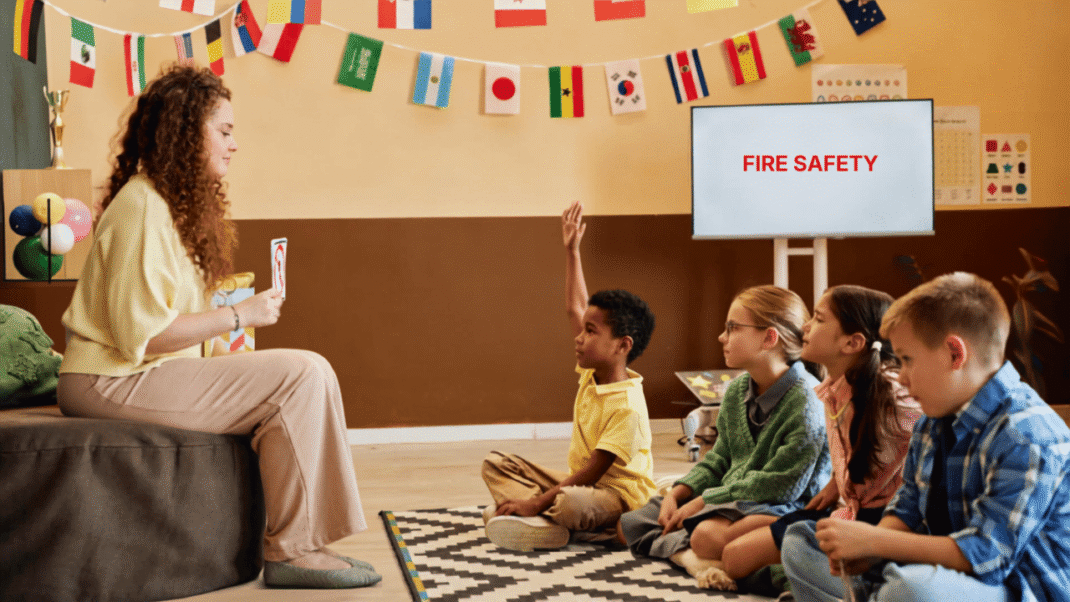
At [School Name] in [City], [State], October’s Fire Safety Month gives children in our Montessori environment a meaningful, hands-on way to learn about safety routines. Through purposeful work, calm practice, and guided conversations, children learn to see firefighters as helpers and to move through drills with focus rather than fear.
When Children Meet the Unexpected with Calm
Some mornings, the fire alarm sounds and a child pauses mid-work, looks toward their Guide, reads the calm in the room, and steps into line without missing a beat. That steadiness comes from somewhere. It comes from practice that felt safe the first time, and the second time, and the time after that.
October is Fire Safety and Prevention Month, and at [School Name], that observance fits naturally into the rhythm of a Montessori environment where purposeful work, clear routines, and respectful preparation are already part of every day.
What Fire Safety Looks Like Inside a Montessori Classroom
Montessori environments are built around order, independence, and meaningful engagement with the real world. Fire safety fits directly into that framework.
During October, children’s areas for learning at [School Name] make room for work that connects safety information to concrete experience. One familiar starting point is a “Hot vs. Not” sorting activity, where children examine pictures or objects and sort them by whether they are safe to touch. The sorting process gives children something real to think about and a vocabulary they can carry outside the classroom. A similar activity introduces 911: when to call, what to say, and what happens next. Children who have practiced a short, calm response to an emergency tend to remember it when it matters.
Story time during Fire Safety Month can bring in books such as No Dragons for Tea or Stop, Drop, and Roll, which present fire safety in a tone that informs without frightening. Guides read these as part of the normal day, giving children room to ask questions and connect the story to their own experience.
One of the most powerful classroom activities is a gear demonstration, where a firefighter, a director, or a knowledgeable staff member introduces each piece of protective equipment by name, explains what it does, and lets children observe it up close. Seeing the gear explained calmly in a familiar setting changes the way children experience the firefighter at the door during a real visit. Montessori from the Heart describes this kind of Montessori fire safety unit as an opportunity to help children understand that firefighters wear their gear to protect themselves while they protect others, a framing that replaces fear with appreciation.
Why Drills in a Montessori Environment Build Real Confidence
A fire drill is not an interruption to the work cycle. It is an extension of it.
When Guides prepare children honestly and calmly before a drill, children understand what will happen, what their job is, and what comes next. That preparation is consistent with how Montessori environments approach any new experience: with clear language, enough context to make sense of the situation, and trust in the child’s ability to respond.
At [School Name], fire drills include a Name-to-Face check after every evacuation. This ensures every child is accounted for by name, not only by number, and it reinforces to children that their presence is known and their safety is held carefully. Escape routes and evacuation maps are posted, reviewed regularly, and practiced so that the path out of the building becomes as familiar as any other part of the day.
For families, this consistency between preparation and practice is part of what a Montessori environment does well. The same approach that helps a child learn to pour water carefully, return a material to its place, or manage a disagreement with a peer extends to emergency readiness. Calm, repeated, purposeful practice builds genuine capability.
How [School Name] Supports the Whole October Safety Picture
Fire Safety Month sits alongside several other areas of preparation that [School Name] addresses each October. Staff complete unresponsive infant drills in coordination with center directors and health and safety leadership, ensuring that the full team stays current and confident in emergency response. Lockdown drill documentation also falls within October’s calendar, following the center’s Emergency Management Plan.
Cold and flu prevention becomes more relevant as the season shifts and children spend more time indoors. Guides and staff at [School Name] maintain consistent hand hygiene routines, support thorough sanitizing of high-touch surfaces, and follow clear illness exclusion policies. Allergy lists are confirmed for accuracy in every area of the building, including classrooms, the kitchen, and the front office.
Each of these practices reflects the same principle that runs through all of October’s focus areas: a prepared environment protects and supports the people inside it, children and adults alike. According to NAEYC, health and safety in early childhood programs depend on consistent practices that the full team understands and maintains together, which is exactly what this month’s work supports.
Frequently Asked Questions
Why does a Montessori school practice fire drills differently from a traditional program?
In a Montessori environment, children are prepared before the drill with clear, honest language about what will happen and what their role is. Guides model calm behavior and move through the process with intention. The emphasis is on building familiarity and confidence rather than testing a response under sudden pressure.
How do Guides talk with young children about fire safety without creating fear?
Guides in a Montessori environment use straightforward language, concrete examples, and activities that give children something real to engage with. Sorting activities, gear demonstrations, and stories with calm, informative tones help children build understanding at their own pace. The goal is information that feels useful rather than alarming.
What is a Name-to-Face check, and why does it matter?
A Name-to-Face check means that after every evacuation, a Guide confirms each child’s presence by matching the child’s face to their name, not simply counting heads. It ensures every individual child is accounted for and reinforces that each child is known and protected by name.
How does fire safety education connect to everyday Montessori work?
Fire safety activities draw on the same skills children practice throughout the day: sorting, sequencing, careful observation, and clear communication. Role-playing a 911 call, identifying hot versus safe objects, or watching gear explained step by step gives children the same kind of hands-on, purposeful engagement they bring to any area of the prepared environment.
What should families know about how [School Name] handles illness prevention in fall and winter?
[School Name] maintains hand hygiene routines throughout the day, sanitizes high-touch surfaces regularly, and follows a fever-free policy before a child returns after illness. These practices are consistent year-round and are reinforced during October as part of the school’s seasonal health focus.
What Families Can Expect This October
At [School Name], Fire Safety Month is built into the rhythm of a month that is already full of purposeful preparation. Children will practice drills, explore safety concepts through hands-on work, and come home with vocabulary and confidence that come from calm, repeated experience.
We would love to share more about how {{School Name}} approaches safety, health, and community throughout the year. Schedule your Montessori tour in {{City, State}} and come see the prepared environment for yourself.